
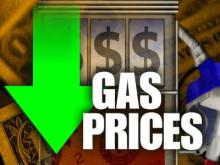
 Just about the last thing Myrtle Beach homeowners expect is for the price of something we use every day to drop precipitously. It isn’t just that we’ve grown skeptical about the way official inflation numbers are formulated (although we have). It’s simply that when it can cost more than a dollar for a Coke, we’ve drawn our own conclusions. To quote The Wall Street Journal’s front page last Tuesday, “Basic Costs Squeeze Families.”
So it’s been slightly disorienting to experience what has been happening with energy prices in Myrtle Beach. It’s not your imagination—as you drive past the neighborhood gas station, the prices on the sign really have dropped nearly 30¢ a gallon over the past month or so. As December began, prices from coast to coast were at their lowest since December of 2010. And home heating oil prices were following suit, leaving one to wonder if electricity and natural gas couldn’t be far behind.
Myrtle Beach homeowners should be among the most pleasantly surprised, for a number of the reasons pointed out last week by Molly Boesel in an Insights blog titled “An Unexpected Windfall.” Ms. Boesel is the Senior Economist at CoreLogic, and like any card-carrying member of the economists’ trade, was able to draw up a number of graphs and charts to bolster her point—which was that lower energy prices might well stimulate housing demand. It’s not just that more money remains in drivers’ and homeowners’ wallets as gasoline and heating/cooling expenses sink. There is another less obvious factor.
That factor is VMT (Vehicle Miles Traveled) per capita, and there seems to be a strong relationship between it and homeownership rates. The logic is that as prices for gasoline and diesel remain low, homebuyers are encouraged to move further and further from urban cores (or wherever their jobs are located)—out to where they can buy bigger and more expensive homes. If that sounds like a bit of a leap, history suggests otherwise. VMT per capita rose steadily alongside the increase in homeownership rates from 1994 to 2004; after which “the trend then reversed from 2005 to 2014, with homeownership rates and VMT per capita falling back to 1994 levels.”
So the possibility exists that if the present energy price levels remain low (more precisely, if future homebuyers believe that’s likely), it could “incent buyers to again” move to larger and more expensive Myrtle Beach digs, heedless of how far their personal commute becomes. It increases the number of potential Myrtle Beach homebuyers.
If common sense tells us, “wait a minute-what about the effect of the housing bubble burst?” Ms. Boesel has an interesting take. She points to an earlier working paper (2012) by three researchers entitled “How High Gas Prices Triggered the Housing Crisis: Theory and Empirical Evidence.” That title was enough to keep me from actually reading it—I was content to just ponder the idea that it was gas prices—not big-time financial manipulations—that caused all the trouble! Leave it to economists to come up with that one…
At any rate, for Myrtle Beach homeowners musing about what they can expect when they put their homes on the market, the possible effects of lower energy prices has to be heartening. Not to mention, another good reason to give me a call to discuss Myrtle Beach’s current real estate market!
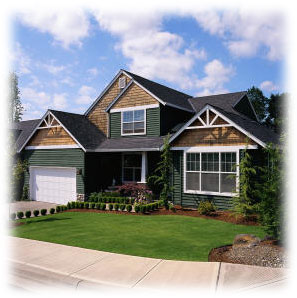 That housing needs change as people get older goes without saying. For Myrtle Beach Baby Boomers, the “getting older” concept has gradually morphed from the distant abstraction it seemed in the 60’s and 70’s to a more immediate concern. And of all the decisions that will have the most impact on those nearing their golden years, buying the right Myrtle Beach home—one that makes the most sense for the future—tops the list.
 I’m always a little surprised that more people don’t take advantage of the holiday season to sell their Myrtle Beach home. The spring selling season may be the most popular, but there are a host of reasons why, for a home that is already market-ready, you might think twice about waiting to list it.
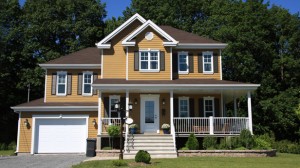 For Myrtle Beach renters who are beginning to investigate the possibility of buying a first house, the prospect can look like more than just a steep hill to climb—it can look more like a cliff! Just last month, the Daily Real Estate News cited recent research that indicates in most places (512 counties surveyed, in fact) it can take the average family more than twelve years to save up for a 20% down payment. When you consider the significant financial advantage that a first house brings its Myrtle Beach owner, the situation seems like a Catch-22. How can you save any faster when that big tax advantage goes only to the existing homeowners?
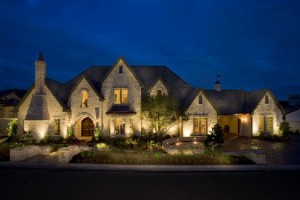 When you are selling your Myrtle Beach luxury home, you are marketing to a narrow niche of the home-buying public. They’re high-end customers, certain to be very smart, business-savvy—and they will know their own mind. They will be hunting for value, of course, because the asking price warrants it. But they will also be looking for a property that has elements that are unique—that appeal to buyers who hope to find a residence not duplicated elsewhere.
 You’re at home in Myrtle Beach, watching TV and trying to unwind, when all of a sudden here comes another baby boomer celebrity, looking into the camera, giving you his most sincere, trustworthy look, then assuring you that a “Reverse Mortgage” really isn’t too good to be true (even though it sounds like it is).
 For anyone who has looked into to buying a Myrtle Beach home several times—but kept getting discouraged every time because of a negative credit report—read on!
 “Hello there! I noticed you admiring this stunning open house. How would you like to sign with me as your Myrtle Beach buyer’s agent, and find your dream home?”
 First of all, a Spoiler Alert: It’s not fair to peek down where the answers are! Now that we’re clear on that, this is a quiz that will tell you how “Decade Sensitive” you are when it comes to Myrtle Beach home décor. It took a little browsing around to put this together, but it sure was fun.
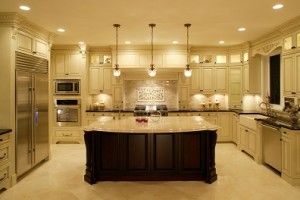 If you had to come up with a single characteristic that the most effective