Plantation Lakes Blog!

Welcome to our blog! Here, you will find tips and tricks on buying, selling, and maintaining your home and community information. We'd love to hear your comments and questions!

Jan. 4, 2015

Selecting Good Myrtle Beach Tenants While Heeding Housing Rules

12-24-tenantEvery landlord has had the feeling at one time or another that a prospective Myrtle Beach tenant may not be a good choice. Call it a hunch, or intuition—but something tells you that this tenant may be trouble down the road. There is more than enough riding on the decision to make you want to pay attention to your instincts, but that’s where being aware of the dos and don’ts of tenant management comes into play. You need to protect your business and property, but in so doing, you also need to heed outside factors.

Chief among those factors is the housing laws and regulations. This is a realm where there’s no shortage of fine print—and since I don’t offer legal advice, we needn’t wade into the technical weeds. But there are some common sense concepts that should shed light on the subject.

One of the key things to remember is that it is frowned upon to arbitrarily accept or reject tenants based on personal preferences or whims. Of course, a landlord does own the property whose use the tenant is asking to borrow, but nevertheless, most people understand why anti-discrimination laws have been created. Some feel they go too far—some, that they don’t go far enough—but at any rate, one fact is indisputable: ignoring the rules can have bad consequences.

One easy-to-follow idea is to prepare your own written standards for accepting prospective Myrtle Beach tenants (standards that are certain to not contravene discrimination guidelines). Another that is universally considered good practice is to require every applicant to fill out an application form with the kind of information that state and federal guidelines allow. When everyone is required to complete an application in full, failing to do so becomes grounds for rejection. The kinds of information should be relevant to the landlord’s business needs; and the standards may be high or low, as long as they are evaluated evenly for every applicant. Some common criteria:

  • Prospective tenants should never have been evicted from a property.
  • Prospective tenants should have a credit score above a certain level
  • They should have no record of any judgments having been levied against them for failure to pay utilities.
  • They should have proof of employment and enough income to reliably pay rent (the national average income level is 3 times rent).
  • Prospective tenants should supply references from previous landlords—references that can be verified over the phone.

Of course, none of this means a landlord is required to rent to just anyone who comes by. The key is to define the ideal tenant, make sure that ideal isn’t based on random discriminatory criteria (like race or sex or religion)—and then to adhere to a consistent evaluation process. And the fact is, the potential financial rewards should more than compensate for heeding the basic ground rules.

If you will be taking a look at the inviting opportunities that Myrtle Beach income properties currently offer, I’d like to show you some of the best ones. Give me a call!
Jan. 2, 2015

Myrtle Beach Foreclosure Watchers Note Last Month’s Trend Change

12-24-foreclosureMyrtle Beach foreclosure watchers keep their eyes trained on the local market filings, but also stay aware of the national trends as a signal of what might be coming down the pike. Across the U.S., by the end of November there were nearly 112,500 foreclosure filings, which amounts to one out of every 1,170 homes.

The company that keeps an eye on such things, real-estate data source RealtyTrac, just offered a bar chart showing historical trends, which highlighted something that would be lost in the raw numbers alone. It showed about 27 (it looked like 27; the bars were tiny) little bars hanging underneath the “0% foreclosure start” line, meaning months in which foreclosure starts had declined compared with the same month a year earlier. Twenty-seven months is more than two straight years of fewer foreclosure starts (including default notice filings, scheduled auctions and bank repossessions). But the standout was one little line that stood bravely alone above the line—and it was for this November!

That doesn’t mean Myrtle Beach foreclosure rates are now destined to explode, but it is the first reversal RealtyTrac has registered in years. For potential home bargain-hunters, it might be a heads-up to keep their powder dry—and perhaps a reasonable idea to once more go over some of the basics that veteran Myrtle Beach foreclosure buyers generally agree upon:

Get pre-approved:

For anyone who wouldn’t be ready with cash in hand, when foreclosed homes are in the cross-hairs, it’s really imperative to have advance bank approval. When a good Myrtle Beach foreclosure value comes up, you need to be ready to act immediately. About 60% of foreclosed homes are financed—and pre-approval is the way to prevent a cash buyer from swooping in ahead of you.

Find a qualified real estate agent:

A competent agent—one experienced in dealing with Myrtle Beach foreclosures—does more than just put you ahead when it comes to the underlying values of homes in the area. Your agent can point out issues others may have overlooked with certain properties, help you navigate local procedures and red tape, aid with inspections, etc.

Focus on REO properties:

Myrtle Beach REO properties are foreclosed homes that have already gone through the foreclosure process completely, and are now owned by the lender. They are typically vacant, and are sometimes priced to sell since banks are incented to get them ‘off the books.’ It’s not universally the case, but REOs can be more straightforward to deal with than auctions, pending foreclosures, or short sales.

Check things out thoroughly:

Foreclosed homes often are in need of repair. Since lenders sell them “as is,” prudent buyers know to identify any major faults before making a buying decision. Good foreclosure inspectors will have a generator and other equipment available so they can test all of a property’s major systems.

Check for liens:

A foreclosed home can be burdened by pre-existing liens from utility companies, municipalities, and unpaid contractors. Knowing about them early helps estimate the total true value (and ensure they won’t cause your deal to fall apart).

Buying a Myrtle Beach foreclosed home can offer immediate value and equity to those who are prepared to make sophisticated inquiries. I offer my clients the kind of experienced teamwork that makes that happen!

Dec. 31, 2014

Myrtle Beach Homes for Sale Use Staging to Set the Mood

12-24-stagingWhen you think about the importance of staging when a Myrtle Beach home goes on the market, you might relate it to how department stores go about increasing sales during the holidays. You have only to stroll through the front door of any of the legendary department stores this time of year to experience what I mean: the most successful ones fairly assault your senses with the color, glitter, sounds (sometimes even the scents!) of the season. If you’ve ever strolled down 5th Avenue in Manhattan any time after Thanksgiving, you’ll have experienced a major jaw-dropping tourist attraction. It seems like the whole place is staged—and masterfully, at that!
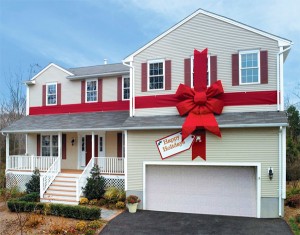
Why so many veteran merchants put that kind of effort (and budget) into holiday decorating is proof of how cost-effective staging is for merchandising. It’s not that different when a home is being prepared to be offered to the public. Effective staging for a Myrtle Beach property performs the same function that Macy’s and Neiman Marcus hope to achieve: to indirectly alter their visitor’s mood to one more receptive to the designer’s goal. Department store holiday décor is more than just eye-candy created to instill a jolly mood. By transporting us into the spirit of the season, it gently cues us into recreating how we feel at the moment of gift-giving (i.e., generous gift giving!). Sometimes that might take 50 or more fully-decorated Christmas trees—all for the sole purpose of creating an atmosphere that Scrooge himself couldn’t resist!

In the same way, staging a Myrtle Beach home effectively can put prospective buyers into in a receptive frame of mind. The goal is to create an instant impression that does two things.

First, it immediately establishes trust. By presenting a well-designed and smartly maintained environment, it acts to dispel one major element of buyer resistance—the fear of the unknown, which in the case of a Myrtle Beach home sale translates into lurking suspicions about the condition of “somebody else’s” house. Good staging envelops visitors in spaces that just feel substantial.

Second (just as important), staging a Myrtle Beach home effectively creates a welcoming feeling. If visitors feel comfortable—at ease enough that they can easily picture themselves at home there—they are much more likely to consider the next steps. Not every home can appeal to every prospective buyer, of course, but good staging does away with idiosyncratic artifacts that would narrow the field.

National studies show time and again that, staged correctly, homes are more likely to garner higher offers—and more quickly. Of course, staging is only one step in the process of listing and selling a home, and it isn’t even the first: that one is giving me a call!

Dec. 29, 2014

Myrtle Beach Home Sales during the Holidays Happen for a Reason

12-24-holidaysaleOkay, granted: a new family home won't fit under the tree...
This year, Myrtle Beach TVs have been filled with commercials that mix Santa with new automobiles. If you believe the ads, a number of automakers apparently offer models that will fly like reindeer onto driveways for big boys and girls who are sufficiently nice. One do-gooder is portrayed stitching up Santa’s ripped tunic in an act of selfless un-naughtiness that earns him a new sedan on the big day.

I’m pleased to say we haven’t seen a National Association of Realtors® commercial with Santa and elves flying a new home onto a surprised family’s driveway, but the idea is no more divorced from reality than Santa’s barnful of vintage Mercedes (it looks like he loves the red gullwing best). If you’ve never thought about shopping for a home during the year-end holiday season, you might be surprised to consider that in some cases this is a very fortuitous time of year for home sales. Aside from the few who can actually give such a fantastic gift (it actually happens!), there are a couple of other reasons why holiday Myrtle Beach home sales do take place:

Lower Prices

First of all, nothing typifies the holiday spirit quite like the spirit of generosity—and at this time of year, there are some Myrtle Beach home sellers who are predisposed to be more generous than usual. The possibility of their accepting lower offers doesn’t necessarily owe to holiday altruism decking their halls. Fewer visits and fewer offers are made over the holidays, while at the same time there are a number of circumstances that could materially benefit sellers who can close out the Old and usher in the New before calendar year’s end. In some cases, as Forbes points out, home sales may be a matter of the seller wanting to complete the transaction before year's end for tax purposes—or simply to get the sale out of the way.

Favorable Rates

When you buy in part determines how much you'll pay, and the waning days of 2014 still offer historically low home loan interest rates. Whether home sales in Myrtle Beach during the coming year will long be able to boast the same advantage is a matter of conjecture, but certainly this is one year when beneficial rates are in place. Last-minute year-end shoppers may reap a happier holiday if they’ve locked in the kind of rates currently available.

Asking Santa for a new home may sound like a bit of an overreach, but for those who make this year’s holiday buying benefits work in their favor, it can be a most memorable season! And for the rest of us who will be leaving a chocolate chip cookie and milk by the fireplace…it couldn’t hurt, could it?

Dec. 27, 2014

When (and When Not) to Tap Your Myrtle Beach Home Equity

12-17-homeequityYour Myrtle Beach home is your castle, sure—but it’s also a great deal more than that. In addition to being the place where you relax after work, spend time with family, and generally live your life, it’s also the most substantial investment most people ever make. Much of its prominence is due to the many advantages homeownership brings in the personal financial realm.

In addition to the ongoing tax savings its mortgage provides, it’s the home equity—the difference between market value and the amount owed—that’s such a valuable contribution. A Myrtle Beach property’s equity adds considerable financial flexibility in the form of easily obtainable home equity loans.

That’s how your Myrtle Beach home can be the enabler for financing key life events—important undertakings like college, home improvements, or major debt consolidation. It’s a mainstream activity, and one that’s growing in popularity. Credit reporting firm Equifax tells us that the number of home equity loans have increased by 16.1% over last year; home equity lines of credit, 21.4%.

But at the same time, it’s the ease with which home equity financing can be arranged that should be cause for caution. Before anyone takes advantage of this kind of financing, they should clearly consider what they are getting into, the better to decide when and when not to make use of it.

There are two forms of home equity credit—the home equity loan (HEL), and the home equity line of credit (HELOC). HELs are straightforward loans, created and retired when you take a one-time, lump-sum of cash, then pay it back, with interest, over time. HELOCs work more like credit card accounts. You are approved for a line of credit with a top limit, and you can spend as much as you want until you reach the limit. You may use it or not as you wish. In fact, with most HELOCs, you're actually issued a credit card or checkbook to use as you see fit.

Deciding when home equity financing is appropriate is an individual decision, but a conventional rule of thumb is that it is usually best reserved for single events. One good use is for home improvements, since they actually add equity to the underlying collateral. Another is for debt consolidation when it has the effect of lowering monthly interest outlays.

When are Myrtle Beach home equity loans not a good idea? For one, if you don't need a lot of money, since opening a HEL or HELOC might involve closing costs and other fees, make sure it makes financial sense. And always look to the future. Since failing to make timely payments can actually force the sale of your home, any time you are less than certain your cash flow will support repayment, better look for other forms of financing. Your Myrtle Beach home is a castle worth protecting; you want to be sure that you are the single voice to say if and when a move is in order.

And of course, whenever you are contemplating a major move, give me a call!

Dec. 25, 2014

When a Real Estate Investment Beckons, the Question to Ask

12-17-investmentIt happens: an all-but-irresistible Myrtle Beach real estate investment crops up when you’re least expecting it. You may have been actively searching for your next family home when you happen across a particularly good bargain—but it’s not a good fit for your own family. “Holy cow,” you think to yourself, “that’s a ridiculously great property at an absurdly low price!”

That can start the wheels turning. If you have the financial resources (or enough experience to know how to corral them), it can be the genesis of a lucrative real estate investment in Myrtle Beach. There is, however, one question to be asked before taking the idea to the next level.

It’s a question familiar to experienced investors in all walks of life. Whenever a phenomenal opportunity presents itself, it’s the first question that venture capitalists, stock market analysts, even small business entrepreneurs automatically pose. There are scores of ways this question might be worded, but they all boil down to pretty much the same kernel of an idea—which is to question the assumptions that make this new venture so seemingly irresistible. In short, at its core the question is simply, “What’s wrong with this picture?”

Applied to any real estate investment in Myrtle Beach, it’s a valuable opening question. Finding a great property at an unbelievable price—one that unmistakably flashes ‘profit!’ for either renting or reselling—does happen, of course. But it’s never wrong to take a step back for a reality check. Remember, there are alert competitive forces at play in the local market. Other real estate investors are constantly on the lookout for the next promising Myrtle Beach real estate investment opportunity.

You may well be among the first to notice a prime offering, but even so, you’ll be well served to look hard for a reason why it hasn’t already been snapped up. The fact is, there is a well-developed, reliable mechanism at play that should lead a seller to have a good idea of what his property is worth—and therefore, what to ask for it. The comparable property value numbers—the ‘comps’—make the market fairly well ‘regularized.’ They make greatly underpriced offerings rare.

Asking yourself what’s wrong here? is a shorthand way of reminding yourself to curb your enthusiasm as you exercise all the due diligence steps: verifying the condition of the property inside and out and spelling out title and lien issues and location, neighbor, neighborhood and historical matters. The curbed enthusiasm should last until those inquiries come up with the right answers…at which point, even the most jaded real estate investors tend to put the pedal to the metal. When everything begins to check out, they know a crowd will soon be forming!

It’s my job to help facilitate every phase of a good Myrtle Beach real estate investment—from discovery and investigation through offer, negotiation and all the documentation steps. It’s what happens when the answer to, “What’s wrong with this picture?” turns out to be, “Absolutely nothing!” If you’re looking to buy an investment property in Myrtle Beach this winter, call me today!

Dec. 23, 2014

Myrtle Beach Economy Boost Foreshadowed by Latest Confidence Rise

12-17-economyMyrtle Beach’s economy, like all others, is largely dependent upon consumers doing what consumers are supposed to do: buy! Why they make their decision to behave or not is every bit as complicated as you would suppose. It’s the product of how their own careers are faring; how the greater economy (and the economy in Myrtle Beach) are doing; even how the world economy is behaving—or seems likely to behave anytime soon.
In all of this, the hard facts about how the economy is actually doing are not just backward-looking, they’re also slow to arrive. Worse yet to those who think numbers should mean something definite, the numbers are frequently recalculated later. The latest ‘jobs’ numbers or the ‘housing starts’ numbers, when they are announced, are often accompanied by a statement that the previous quarters number has been “revised to” x. If you are a local business person who makes projections based on the best information available, that wouldn’t be the new number—it would be the previous, now revised number: very old information.

There is one way around this, though, and that’s fortunate. Everybody has the same reliability and timeliness problems, yet have to have some basis for making discretionary spending decisions. The usual solution is to rely upon measurements not of the actual economy’s activity now or in the past, but of what most people expect that activity to be in the future.

Yes, that kind of measurement is ‘soft’—opinion, rather than hard data. But if those expectations are widely publicized, they affect what actually comes to pass. If consumers are bullish on the future, well, that’s reassuring news! Myrtle Beach businesses are encouraged to stock their shelves. People are more likely to list their Myrtle Beach homes for sale. The local economy looks better and better! On the other hand, if consumers are depressed about the future, caution will prevail. Businesses will hold off on new hires and trim their inventories. You can’t be too careful, after all. To some degree, consumer expectations often become self-fulfilling prophesies.

That’s why December’s latest consumer confidence reports are the best news for the future of the economy we’ve heard for some time. Last week, Reuters ran the headline, “U.S. Consumer Sentiment at Eight-Year High”; the Business Insider, “Consumer Confidence Crushes Expectations.” Reuters attributed the burst of citizen optimism to “improved prospects for jobs and wages, and on lower gasoline prices…”

The University of Michigan co-sponsors the index upon which the numbers are based, which showed December’s reading of consumer sentiment at 93.8, “the highest reading since January 2007.” That was a full 4 points above the median that had been previously forecast by 70 economists. It was also 5 points higher than the final reading for November.

If the Myrtle Beach economy perks up as anticipated, area real estate watchers should expect a noticeable uptick in activity—particularly if mortgage interest rates stay low, and inflation remains a non-factor (the same survey pegged consumer inflation expectations at 2.9%).

If you are a Myrtle Beach homeowner or prospective buyer with an equally upbeat outlook, it’s good reason to give me a call to discuss how your plans dovetail with a rebounding market!

Dec. 22, 2014

Who, What to Tip: Holiday Guidance for Myrtle Beach Homeowners

12-17-holidaytippingAt holiday time, Myrtle Beach homeowners can count on being flooded with decisions. For everything from the extent of front yard decorations to the menu decisions for family gatherings, more than anything, ‘tis the season for organization and planning. Homeowners have done their best to minimize the likelihood of travel-related scheduling emergencies—never mind the weird weather patterns that make that a coin-toss. They’ve either succeeded or failed in syncing their gift-shopping to take advantage of sales—although this year, 1-day sale announcements seem to be popping up and disappearing as fast as Whack-a-Moles. 2014’s calendar also reduced the number of days between Thanksgiving and Christmas, so there’s been less time to get everything done…
Given all that, Myrtle Beach homeowners can scarcely be faulted if they haven’t given a lot of thought to holiday tip giving: who, how much…the usual conundrum. I thought I would do some current research and offer everyone some guidance, but I should warn you: I didn’t find much.

I thought the answer would lie with Dr. Wm. Michael Lynn, the tipping universe’s reigning academic expert. In case you never suspected there was such a field, you should know that Dr. Lynn is the Burton M. Sack Professor at Cornell University. Although, technically, Dr. Lynn’s professorship is in “Food & Beverage Management” (and before the holidays are over, some Myrtle Beach homeowners may wish they’d paid more heed to their own personal beverage management), his most important work has been on the subject of tipping.

Unfortunately, when I delved into some of his thoughts so I could share them with Myrtle Beach homeowners, what I found turned out to be a little more technical than expected. I’d hoped to find something like “hairdresser: cost of a session” or “babysitter: hourly rate x 4” — some cut-and-dried guidance like that. Instead, I found research papers on topics like the relationship of tips to waiters’ and waitresses’ shirt colors (wearing a black and white shirt gets better tips than red); whether religious people are poor tippers compared with less religious people (not really, unless the service is really bad); and how the desire for social approval motivates tipping of car guards in South Africa (I’m still not sure what a ‘car guard’ is).

Undoubtedly these insights are valid, but don’t provide Myrtle Beach homeowners with much useful guidance. With time running out, I turned for help elsewhere, and did eventually emerge with some vague but welcome suggestions, mostly from Emily Post and the Chicago Tribune:

  • Grade school teacher: holiday gift (something thoughtful; a nice card will do)
  • Doctor, lawyer, accountant: skip entirely
  • Newspaper deliverer: $15-$30 (remember, this comes from the Trib)
  • Housekeeper/Cleaner: Up to amount of one week’s pay and/or small gift
  • Gardeners, Trash collectors, all the rest: advice varies from $10-$50!
  • Babysitter: One evening’s pay and a small gift from the child/ren
  • Butler: pay close attention to reruns of Downton Abbey

But finally there was truly useful advice offered by a psychologist in the Midwest. She pointed out that holiday gratuities are never mandatory; they’re appropriate when you find them to be so, and gift or cash, the size is what makes you (and the recipient) feel comfortable.

I like that advice…and what a great time of year for us to hear it! In the same spirit, I hope you and your family find in 2014 the warmest, most wonderful holiday season ever!

Dec. 20, 2014

Lease-Option: a Myrtle Beach Rental Investment Owner’s Alternative

12-10-leaseSuppose your Realtor® helped you land a prime Myrtle Beach rental investment property—and you’ve been more than content with the result. Your longtime tenant proved to be conscientious and dependable, with resulting passive income that has been quietly building your bank account with very little oversight from you. In short, your Myrtle Beach rental investment has made you a very happy landlord.
But now, that smooth sailing may be nearing an end.

Your tenant rings you up with the news. Even though she loves the house, over Thanksgiving dinner her brother convinced her she should become a Myrtle Beach homeowner herself. Since she doesn’t have quite enough cash to qualify for a home loan, he told her she should go out and find a rent-to own property. But since she’s content with the house she’s been living in—your rental investment—she wonders if you’d like to discuss switching to a lease-option arrangement?

If you had ever contemplated cashing in on your rental investment, there are several reasons you might want to give it some thought. First, this would spare you the effort and expense of selling. You won’t have to wait for an interested buyer—and you know from experience that your tenant is a solid citizen. Furthermore, whenever you put a rental investment property up for sale, there can be complications if you want to continue to rent it—sometimes a tenant resents having to accommodate strangers tramping through their home. Worse, they may even subtly sabotage showings.

Although there is no single formula for how a lease-option (aka ‘rent-to-own’) agreement is constructed, some basic underpinnings are common. The landlord retains ownership and the tenant pays rent until the option to buy is exercised. Both agree on the sale price and on the specified period of time by which the sale must be completed (usually the time the tenant estimates will be needed to qualify for a mortgage). As compensation for your agreement to refrain from selling the property to anyone else during this option period, the tenant usually pays either an up-front fee or agrees to a higher-than-market rent. Some of that overage may be set aside to be applied to the ultimate purchase. Property maintenance is often made the responsibility of the tenant, along with provisions in case he or she fails to maintain it properly. And a number of other issues may be addressed.

But if the tenant does not exercise the option to buy within the specified timeframe, typically no refund is owed—the option lapses, and since the deed has always remained with the investment property owner, it becomes free to be rented or sold to another party…that is, if all local and state laws have been scrupulously observed—and all other conditions met. In other words, if ever there were an agreement that cried out for a trusted lawyer’s oversight, this is it!

Offering a lease option on your rental investment in Myrtle Beach is just one possibility when you’ve landed a choice property (which is where I come in). If you’re considering selling your Myrtle Beach investment property and would prefer a more traditional route, call me today!

Dec. 18, 2014

What Improvements Add the Most Real Estate Value?

12-10-valuebooster“The best real estate value in Myrtle Beach!” is certainly a little bit over-the-top when it’s used in a listing, but in truth, that’s pretty much what most prospective homebuyers in every price range actually hope to find. For homeowners planning to list their own Myrtle Beach homes, it’s good to keep in mind. When home improvement projects are going to be part of the preparations, adding real estate value without inflating the asking price is a goal worth pursuing.

Since there are so many improvements that could add to a Myrtle Beach property’s real estate value, comparing how they have fared recently when it comes to the bottom line is worth doing.

The Home Office: Myth?

Home office conversions haven't appeared near the top of major Return On Investment (ROI) analysis lists for very long, so their performance is ambiguous. According to the yearly “Cost vs. Value Report” by Remodeling magazine, home office remodel projects don't even break the 50% ROI mark. That’s a precipitous fall from earlier projections. I would guess the reason is that the analysts pegged the average cost at $28,000—but with the proliferation of laptops, tablets, and home Wi-Fi, why should a home office cost that much? (As a side note, it’s probably a reasonable guess that the same technological progress has incrementally lessened consumer demand for designated home offices).

Cost Matters in the Kitchen

The kitchen remodel is what most people picture when they think of big home improvement projects, and rightly so. But it’s here that planning pays off: not all kitchen upgrades register as equally good real estate value boosters. The kitchen is already the most complex room in your home, and it’s also a place where you can spend a fortune on fancy appliances and sleek cabinet replacements. The numbers don't lie: when it comes to kitchens, your best ROI comes through limited budget-conscious projects. Leaders in cost recouping: new sinks, replacement counters, and highly targeted improvements like backsplashes.

Energy-Saving Doors = High Value

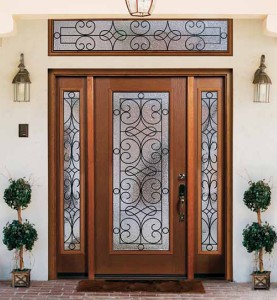
Replacing the front door with an attractive, energy-saving variety remains the top dollar-for-dollar investment. It makes sense when you remember how important curb appeal is. A properly insulated and sealed door will also save money by cutting down heating and cooling bills—savings that show up in utility bill receipts when you’re queried on the cost of running your home.

Before you hit the hardware store or call a contractor, remember that maximizing the real estate value return is the ultimate goal. Some home improvement projects won't add as much value as one might assume, which is why I keep an eye on the latest cost vs. value reports—and share them with my clients!