
Plantation Lakes Blog!

Welcome to our blog! Here, you will find tips and tricks on buying, selling, and maintaining your home and community information. We'd love to hear your comments and questions!

Feb. 25, 2015

News Flash! Men, Women House Hunters Differ!

2-20-a-menwomenLast week, The Wall Street Journal made it official: they had a slow news day. It was February 11 (that was Wednesday) when they ran the feature story, “A Gender Gap in Real Estate.”

This was something Myrtle Beach house hunters (not to mention those hoping to attract their attention) could certainly appreciate: an article about what men and women consider “very important” when it comes to features in homes. Author Adam Bonislawski based his story on National Association of Realtors® survey information; the results pointed to some dissimilarities between what women and men look for.

Now, I’ve had a good deal of experience helping both men and women house hunters in Myrtle Beach, so it didn’t come as a complete surprise that their priorities differ. For instance, I was not at all surprised about the contrasting emphases the two put on the importance of having a walk-in closet in the master bedroom. The only surprise was that it was the men who found it much more important (38%-29%)!

What about house hunters’ feelings about the importance of kitchen appliances being new? Same phenomenon: men 38%, women 29% (possibly because appliances are gadgets, and men like the newest gadgets). How important is it that a home be single level? The sexes reverse: Male house hunters think it is very important 18% of the time; women, 31%. I’d bet that within the 18% that are masculine we’d find a disproportionate number of stay-at-home dads.

House hunters registered a big gap when it comes to rating 9-foot or higher ceilings as very important. A miniscule 8% of females agreed, while nearly three times that many of their male counterparts thought so (21%).

One harder to guess feature would have been the desirability of a kitchen island. Nineteen percent of male house hunters found it very important, versus just 8% of the females. Does this mean women are tired of entertaining? Do they no longer consider their masculine counterparts capable of sous chef action? Or is it that more men are taking over the cooking duties?

I’d have to admit, I’m less than certain that these national averages are 100% reflective of what house hunters in Myrtle Beach prefer. Yes, Myrtle Beach men certainly value attics (13%) more than the ladies (7%)—they do tend to spend more time up there (but neither are terribly committed to that form of high living). Basements are preferred by close to equal numbers.

Being that these findings are sort of interesting (not fascinating, perhaps, but at least sort of interesting), you might be wondering why at the beginning I thought it was evidence that the WSJ was having a slow news day. It’s because of some tiny print at the bottom of a graph, which gave the date of the NAR survey—all the way back in 2013! More up-to-date is what we find unfolding for today’s Myrtle Beach house hunters: give me a call to get the latest!
Feb. 24, 2015

Myrtle Beach Rental Property Choice Involves 6 Key Factors

2-20-rentalJust about any investor on the lookout for a promising Myrtle Beach rental property has a number of assumed criteria in mind—often arrived at without bothering to sit down to list them. Remember, this is already a successful individual, usually with ample business experience—and always with the financial acumen to be able to make a substantial investment. For them, creating a written decision matrix really isn’t necessary.
Still, there’s a lot of literature on the web offering opinions on what are the most commonly agreed-upon factors for choosing a rental property. Quite a few “Top 10”s. Going over them, it turns out that some are only slight variations on a single theme, so I’ve boiled them down to a “Top Six.”

The first one is barely ever mentioned. It’s this:

1. Most investors have predetermined the price range that his or her Myrtle Beach rental property must fall into, but that can turn out to be a false step. If the goal is to garner the maximum return, it’s possible that some humbly-priced Myrtle Beach rental properties can actually turn a greater annual profit—even in absolute dollars—than some higher-end homes (particularly those that suffer extended periods without suitable higher-end tenants). So Number 1 is SET YOUR INVESTMENT GOAL. Cash flow return can be a very different goal than long term property appreciation.

2. LOCATION LOCATION LOCATION. This is the one that combines a half dozen factors, variously listed as Neighborhood, Proximity to Jobs, Amenities (parks, malls, gyms, movie theaters, public transportation hubs, etc.), Crime, Schools, and even Property Taxes. This factor might be chosen for convenience, as when a rental property investor wishes to be able to supervise the property; or for an expectation of value appreciation in a Myrtle Beach area which is gaining popularity. As everyone has had heard from time immemorial, L.L.L. is always important!

3. HEALTH OF THE PROPERTY. If the underlying structure and mechanicals have been intelligently designed and well maintained, this one is of no importance. If not, a thorough inspection with top-grade recommendations and cost projections is a must.

4. VACANCY RATES. The number of rental homes listed and the number of vacancies should be considered highly important for determining a promising rental property in Myrtle Beach. In newly expanding communities, sometimes you can spot a man parked near an intersection, clicking away on a counter as the autos pass by. He’s measuring traffic to see if the volume is great enough to support a gas station, or market, or mini-mall. The turnover of rental listings—how long rental properties stay vacant from week to week—can provide guidance about the same kind of information.

5. COMPETITIVE MARKET. The average rent amounts advertised for comparable properties can be the decisive factor for whether a rental home investment makes financial sense.

Of course, another factor that can make a big difference is the experience level of your Myrtle Beach Realtor®. That’s actually key factor #6—and (I hope) where I come in!

Jan. 19, 2015

Myrtle Beach Mortgage Interest Rates Could Become a Missed Opportunity

1-7-mortgageMyrtle Beach’s mortgage interest rates have been so low for so long that there is the definite possibility that the real value they represent—for both Myrtle Beach home buyers and sellers—may now be being taken for granted.
It’s only natural. If you believe that past history is the best predictor of future performance, last January’s common wisdom that mortgage interest rates in 2014 would head up to at least 5% or more wouldn’t have fazed you a bit. One quick glance at the squiggly lines on a chart showing either 30-year or 15-year fixed mortgage interest rates reveals a pronounced downward slope. Ever since mid-year 2007, it looks like a playground slide. It does level off at the end, starting around three years ago; but if you take in the longer view, back to 1982, you see an even steeper tumble—all the way down from (gulp!) 18%! Only the bravest child would dare climb the ladder to that playground slide…

For a couple of years now, most of us assumed the bottoming-out of Myrtle Beach mortgage interest rates would reverse soon enough. But, as The L.A. Times pointed out on New Year’s Day, “…instead of the year ending with 30-year mortgage rates at 5% as many had projected, it wound up at an average of 3.8%...” Now, although some industry leaders (like the Mortgage Bankers Association) again expect mortgage interest rates to end 2015 at around 5%, most forecasts “now come with more sheepish comments about clouded crystal balls.” And The Times also acknowledges that some observers think rates could stay low, or even decline.

“I’ve been wrong about fixed mortgage rates all year,” the chief economist for Moody’s Analytics is quoted as having grumbled. Now “he wouldn’t be surprised if fixed mortgage rates are near 4.5% at the end of 2015.”

With this newly-voiced uncertainty about future rises, coupled with last year’s rates refusing to budge from the familiar comfort of basement levels, it would hardly be surprising if most folks have simply adjusted to today’s Myrtle Beach mortgage interest rates—and allowed their own real estate planning to proceed accordingly.

If so, that’s likely to become a real forehead-slapper when they look back on it…possibly in the near future. Low mortgage interest rates in Myrtle Beach are in actuality a rare gift: a true windfall for those able to capitalize on them.

If you are contemplating buying or selling a Myrtle Beach home anytime in the future, I do hope you’ll give me a call to discuss today’s market—and the opportunities that are here (and right now). As we know from our own playground experiences, once you find yourself at the bottom of the slide, sooner or later you’ll be climbing up that ladder once more!

Jan. 17, 2015

What About Renting Your Myrtle Beach Home?

1-7-rentYou are a Myrtle Beach homeowner, but now your family has simply outgrown the place. You’re almost ready to start hunting for a new home—but hesitate. The fact is, you’re reluctant to give up your present property. It’s been a terrific home, and you suspect it’s only going to grow in value…

If your financial fortunes are on the upswing, you may be wise to consider the viability of renting your Myrtle Beach home. After all, using it as a profit-making venture even as you expand your Myrtle Beach real estate holdings might just be doable!

Many a successful landlord has begun that way, and find it every bit as rewarding as they’d hoped. Renting your Myrtle Beach home sounds like a straightforward proposition in the abstract, for sure: recruit a reliable tenant, then sit back and let any remaining mortgage payments take care of themselves. And it can be a fabulous plan—but like all successful enterprises, is most likely to reward those who prepare. If you are entertaining the prospect of renting your own area home, here are three questions you might ask yourself as you make that decision:

How’s Your Nest Egg?

The transition from residence to rentable home can take a fair amount of cash, even in a well-maintained property. You’ll want to capture top dollar anytime you rent your home, so any hint of potential roof leak or unsafe walkway needs to be eliminated. Realistically, this might be the time to upgrade the kitchen and re-tile the entryway floor. While you pencil in those costs, prudence dictates that you plan for fallow rental periods, too. While it’s possible you might find a suitable tenant as soon as you begin renting your Myrtle Beach home, you should budget for some months when that doesn’t happen.

How’s Your People-Meter?

Seasoned landlords all have war stories to tell: the presentable young couple who turned out to be non-stop party hosts for less-than-presentable friends, or the roommates who wound up playing host—or subleasing—to quite a few unauthorized friends. Before you begin renting your home, ask yourself if you’ve looked into exactly how you plan to recruit and screen tenants. You’ll want to highlight the features most likely to draw the best applicants, and advertise in outlets they visit most frequently. And while you’ll want to trust your gut instincts, you’ll need to do a bit of homework to be sure you stay in line with all fair housing laws—even if it all means your house might sit vacant a little longer.

How Much Time Can You Spare?

Late nights; vacations; rainy days—a rental can require attention on its own schedule, which doesn’t always match yours. When you start renting your Myrtle Beach home, you need to be able to invest a certain amount of your time. You will be adding the upkeep of another household, and as you already know, that does require diligence. If your spare time is already in short supply, the realistic answer will be to hire a Myrtle Beach professional property management company. If adding their fee means a bottom line that’s close to the break-even point, your decision will become one about whether expanding your Myrtle Beach real estate holdings (rather than profit-making) will be reward enough.

Whatever your decision, I’m here to help you further all aspects of your Myrtle Beach real estate endeavors!

Jan. 15, 2015

When a Myrtle Beach Neighbor Misbehaves…

1-7-neighborFinding the absolutely perfect home—then being able to afford—may be every Myrtle Beach home seeker’s dream accomplishment, but absolute perfection in any realm usually remains exactly that: attainable in a dream, but nowhere else.

In fact, online mortgage site HSH.com surveyed homeowners and found a tiny 20% of the home owning population had zero complaints about their current digs. Sixteen percent wanted a larger place; 9%, more closet space. Lower percentages wanted more natural light, lower maintenance costs, another bathroom, or a swimming pool. Interestingly, about a quarter of respondents wished they had done more research on their new neighborhood…or neighbors.

Although the pollsters didn’t give a clear report on how many considered neighbors the biggest problem, it’s certainly true that issues with neighbors can add unnecessary stress for you or your family. It’s rare to find people who actually decide to abandon ship because of neighbor problems; much more commonly, Myrtle Beach homeowners just learn to live with them. But rather than accept that burden, psychologists prescribe a number of ways to try to address such problems. At least four approaches can be worth a try:

1. Get in Touch.

Rather than sit and stew, communicate. It can be hard to remember that even unreasonable neighbors are people, too. They make mistakes, and sometimes behave in ways they assume to be perfectly normal, but which are viewed by everyone else on the planet as out of line. Remember, they aren’t mind-readers; it’s not likely they view what they are doing the same way you do. Unless they are truly aggressive, they just need to get a glimpse of how their behavior is coming across. If you fail to tell them that you don't appreciate their guests parking in your driveway, it will continue to happen.

2. Speak Calmly.

Human beings have a tendency to sub-consciously mirror body language—including things like tone of voice and word choice. In the same way that seeing a person smile makes you want to smile, too, if you wait until you are boiling mad before you confront your neighbor, you’re more likely to assume an aggressive posture (stand too close, ball your hands into fists, point with your fingers, etc.)—and earn a similar response in return. That’s how real street fights begin, and they can result in greater problems than your neighbor’s "borrowing" your newspaper!

3. Keep a Record.

Even if this is your very first time talking to your neighbor about their dog's midnight Barkapalooozas, it's helpful to keep a record of your conversations. Since this might not be the last time, email yourself a summary of each interaction—one that includes what you discussed, and the response (“Okay." "I'll get right on that." "Take a hike!" and so on). In case problems linger or multiply, being clear in your own mind about the specifics will strengthen your position. When you are absolutely certain where things stand, you will be able to keep your cool much more reliably.

4. Praise Your (No-Longer Difficult) Myrtle Beach Neighbor.

If you ask your neighbor to change his or her behavior, don't just leave it at that. Let them know that you've noticed and appreciate the change. Most people value recognition of their efforts, and praise makes it more likely to be continued. If your Myrtle Beach neighbor is a relatively reasonable person, it may be easier than you’d think to nurture an open and friendly future relationship—it certainly can’t hurt to try.

Been thinking of buying or selling in your neighborhood? Call me today!

Jan. 13, 2015

Giving Your Myrtle Beach House the Full Gourmet Treatment

1-7-foodie“A kitchen can sell a house” is a proposition that often proves true—well-designed kitchens can drive value. Given the popularity of cooking shows, artisanal cuisine, and the growing number of new gizmos and gadgets concocted for the advancement of culinary hobbyists, selling a house in Myrtle Beach can turn on its gastronomical appeal—at least to a select segment of today’s home buyers. You may not want to fight it—especially if your house has a shopping cartload of gourmet potential. If you have a spacious kitchen, it could be a possibility! Consider some of the marketing maneuvers that have been shown to attract foodies looking for a place to lay their platters:
Finding Foodie Features

A Myrtle Beach house doesn’t necessarily need a fully outfitted gourmet kitchen to catch a foodie’s eye (although that doesn’t hurt, either). Any reasonably food-obsessed family will be attracted by features which focus on the preparation, storage, and/or enjoyment of delicious food. Rebranding a closet as pantry, a deck as outside dining area, or even a basement bar as canning station can invite home cooks to visualize the unique culinary features your Myrtle Beach house has to offer.

Milking the Kitchen

If you are going to invest in any one remodel for your house, target the kitchen. But know the risks. In order to sell to a true gourmand, the kitchen will need to be up to snuff (and foodies are known for being picky). Simpler can be better when it comes to a soon-to-be gourmet kitchen—and it’s probably true that most any would-be chef will be bringing his or her own specialty gear to the party (it’s half the fun!). Focus on utility instead of bling, counter space over weird gadgets, and big sinks instead of big windows.

Tempting Their Senses

Don’t forget the power of suggestive staging when it comes time to tempt a true foodie. Many prospective buyers will be entering your house with hopes that they’ll be able to create their future fabulous tables here. For a foodie, that means the ability to prepare and enjoy delicious meals. It’s unimportant if the fantasy is a notch higher than their actual skill level—that’s what aspiration is all about. Indulge imagination by focusing on the senses. Offer pristine spaces, pleasing light, and generic (yet tempting) flourishes, such as a well-set table and evocatively, not-quite-bare counters. And don’t forget to remove any and all incriminating food vestiges before allowing foodies in for an open house! Your old cereal boxes, two-liter bottles of soda, and meals-in-a-box may be a busy weekday’s go-to fare, but they’re anathema to a true foodie. Banish them until the last open house visitor has departed.

Remember, selling your Myrtle Beach house can wind up being all about how you market, stage, and re-imagine the space. To garner foodies as buyers, pick up a couple of copies of Cooks Illustrated and Saveur, tune into The Food Network, and start to think like a foodie. And give me a call, too: between us, we should be able to produce a truly delicious sale!

Jan. 11, 2015

When Myrtle Beach Homeowners Consider Buying a Second Home

12-31-2ndhomePeople approach the whole idea of owning a second home from a hundred different perspectives simply because a second home can answer so many different purposes. If you are an Myrtle Beach homeowner at the stage in life where making retirement plans is becoming a more immediate imperative, you might want to buy a second home as a vacation destination—but one which is also a tryout for your family’s future center of operations.

Those who have spent a good part of their lives in cities sometimes seek a second home in the mountains or at the shore as a restorative refuge. People living in less crowded environs might crave a pied-à-terre for proximity to a city’s cultural riches. There really can be a hundred different reasons (and that’s not even counting all the financial ones)!

Once you begin to seriously entertain the notion, it becomes evident that deciding on which of many possible directions to pursue will involve weighing the tradeoffs each presents. In addition to an opening a conversation with the Myrtle Beach real estate professional whose advice you’ve come to trust the most, some of the main points you will want to consider—

If the second home is going to serve even temporarily as a weekend getaway spot, then buying within reasonable driving distance may be more important than you might assume. Keep in mind that the drive (or flight) will grow steadily less interesting as time passes.

In most instances, a second home will be occupied by members of your family only on a part-time basis. This brings up a number of issues—among them, insurance. Vacant properties present a different profile to insurers than do homes that are occupied most of the time. Hazard insurance tariffs could also differ from what you are used to (especially in flood-prone areas). Investigating insurance coverage and costs early on in your search will help you to avoid surprises.

You should consult your tax expert for details, but as a general rule, if the home is not rented out as a business proposition, you’ll likely find that you are able to deduct mortgage interest and property taxes on your Federal tax return. Then again, if you are thinking of renting the house out for more than 14 days per year, rental income is taxable. In that case, though, you’ll be able to use deductions for expenses, such as insurance, maintenance, professional fees, and sometimes even depreciation. Each situation will be different—again, your tax professional will have the relevant answers.

Financing a second home is similar to financing your main residence. You are likely to need a down payment of 10% to as much as 30% in some cases. If you will be drawing on the equity in your current home, it’s only prudent to be able to retain a reasonable amount of reserves for unforeseen emergencies.

Many people buy a second home in anticipation of retirement. If that is the case, think of factoring in the availability of quality medical and support services in your search areas. A remote cabin in the woods may seem appealing now, but as a retirement venue, maybe not so much!

Thinking about the long range is never more important than when you are entertaining the purchase of a second home. I’m here to help clarify those issues, as with all your other Myrtle Beach real estate need.

Jan. 9, 2015

Forecasting the Future for Myrtle Beach Housing in the New Year

12-31-forecastIt does seem to be time for an in depth forecast about Myrtle Beach’s housing outlook for 2015. The prediction game is going strong everywhere else this week, with print and online journalists and TV talking heads interviewing experts and each other about what to expect in the coming year. Some make noteworthy predictions—but more seem to be doing their best to sound authoritative while remaining vague enough to avoid provably wrong calls.
I have to sympathize. Last year, after delving into the Myrtle Beach housing outlook to come up with predictions, the one I put at the top of my list was a forecast that mortgage interest rates would soon be climbing. That was safe—rates had been so low for so long, history told us they had to rise, didn’t it? Besides, all the experts agreed.

What then happened in 2014 explains why financial prospectuses tend to footnote projections with sentences like “past performance is no guarantee of future results.” Rates did rise; but then sank again. So this year, it’s probably a better idea to shelve the crystal ball in favor of laying out some of the factors we do and don’t know—factors that should influence the direction of Myrtle Beach housing trends for the coming year.

First, what we do know for sure. Since Baby Boomers make up the largest demographic in the country...

Uh-oh! No they don’t. The Census Bureau now says that the cohort of 23-year-old Americans has just become the largest in the country. Followed by 24- and 22-year olds, respectively. Probably why the chief economist at the NAR® projects that this generation will “drive two-thirds of household formations over the next five years.” He says 2015 will become the point at which the millennial generation’s presence in the housing market will be truly felt for the first time. So what we do know is that younger buyers have begun to join the ranks of homeowners in substantial numbers. That’s different; it has the look of a major trend.

And mortgage rates will rise (because they have to, right?) Again, this one only seems to be a reliable projection. At this point, a 30-year mortgage is actually lower than it was a year ago. It is thought that foreign influences (uncertainty in Europe; economic weakness in the Far East) are what have held down U.S. housing financing rates. If that’s true—and since no one can say with any certainty what to expect from events overseas—mortgage rates and their influence on Myrtle Beach housing activity should more accurately be placed in the don’t know column.

So will Myrtle Beach housing prices and sales activity rise in the coming year? We do know that the public opinion polling data supports that likelihood. Consumer confidence is building, possibly because of a brightening employment picture (not to mention last week’s record-breaking Santa Claus rally and other strong economic news). In fact, real estate mega site Trulia reports that their samples tell them “consumers expect 2015 to be better, especially for selling a home.”

Economists agree. Fortune.com says that economists are “nearly unanimous in predicting that home values would continue to rise” and that “surveys of homeowner sentiment suggest that more of them will look to sell their homes” in the coming year. If you are leaning in that direction yourself, there’s one factor we know for sure: I’ll be standing by in 2015, ready to put all of my resources and experience to work for your Myrtle Beach home sale!

Jan. 7, 2015

Myrtle Beach Home Sales Needn’t be Stalled until Springtime

12-31-warmPast history tells us that home sales in Myrtle Beach perk up come springtime, just as the advent of colder weather brings a slowdown in Myrtle Beach home sales. But what if your own family and professional situations dictate that now is the time to list your own Myrtle Beach home? What if the weather curve balls Mother Nature has been serving up have to take a back seat to your own scheduling imperatives?

Fortunately, the seasonal home sales ups and downs needn’t deter those plans. The fact is, several advantages can be had when a motivated seller and determined Realtor® put their minds to it. It’s largely a matter of attitude:

1. Make Your Home Feel like an Escape from Winter

Instead of allowing the cold weather to burden your whole endeavor, try to bring a little home sales jujitsu into play. The classic Japanese defense tactic relies on using the strength and weight of an adversary to disable him. In the same way, you can turn inclement conditions to your advantage by recognizing that they can help your home stand out as a beckoning refuge. Think: the nastier the weather, the better! As soon as potential buyers walk in, do everything you can to help them feel the sense of comfort a substantial shelter like this provides. The object is for them to recognize that here is the kind of home they want to wake up to on cold mornings!

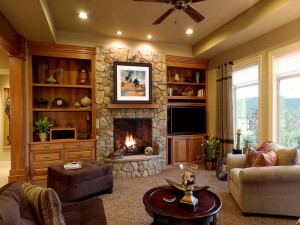
Warmth is the starting point, so keep the temperature cozy (this is no time to fuss about the heating bill). If you have a fireplace, be sure it’s lit when visitors arrive. Fluffy comforters in the bedrooms and throw rugs that break up large areas of bare flooring will add, too. Further the effect with cups of warm cocoa, apple cider, tea or coffee that will warm buyers from the inside.

2. Clear All Walkways

It’s relatively easy to control the interior of your house by turning up the heat. Outside, though, you’re at the mercy of Mother Nature. Clear pathways, and pay special attention to any surfaces that might become slippery when the weather conspires against you. It’s especially important to clear the driveway, stone paths, sidewalks, and anywhere else buyers may want to inspect or visit. A clear path can be the difference between getting an offer…and getting sued!

3. Use the Slump to Your Advantage

Scads of homeowners buy the myth that Myrtle Beach home sales are next to impossible to accomplish during wintertime. That’s why many—even some whose homes have been listed since autumn—fail to energetically market their homes until the weather clears (sometimes even failing to respond to home tour requests). That gives you a competitive advantage—and another jujitsu opening. Since prospects doing a Myrtle Beach house tour will be less hurried than usual, your Realtor should be ready to spend more time with them to share persuasive points that make your property the standout value they’ve been after!

Sure, home sales during the shiver-producing months presents particular challenges, but the hidden advantages can be decisive. If you have been ready to sell, but hesitating until kinder weather surfaces, do give me a call!

Jan. 5, 2015

Year-End Review Shows Institutions Exiting Investment Picture

12-31-investmentAt 2014’s year end, it’s as good a time as ever to look back over the real estate investment landscape to see if any new trends or directions may have become apparent. It does look as if one development in the country as a whole may cause ripples that could affect Myrtle Beach real estate investment hunters in the coming year.

This is a development with roots that go back to the 2008 upending of the housing market. That triggered a glut of foreclosures, so that banks, already up to their vaults in turmoil, found themselves holding uncomfortably large numbers of repossessions. Bright-eyed executives at private equity firms and hedge funds were quick to spot this as a new opportunity: they could scoop up the repossessions for a song, rent them out, and then just wait to sell until the economy improved.

By 2013 The New York Times was reporting that the Blackstone Group now owned some 26,000 rental homes—with Colony Capital picking up more than 10,000 single-family residences. Warren Buffet had endorsed the idea; J.P. Morgan and Morgan Stanley had set up new real estate investment funds earmarked for the purchase of houses. Vague concerns about absentee investor landlords were waved away—this was like some kind of newfangled Institutional Investor Gold Rush, and as any ‘49er could have told you, in a gold rush, there isn’t time to worry about the details!

The main real estate investment targets centered on certain markets: Minneapolis, Atlanta, Detroit, Los Angeles, Las Vegas, New York, and Phoenix saw the most activity. In some regions, 2012 and 2013 saw bidding wars for repossessions and lower-priced housing, until by July of this year, The Times could report that in some areas “prices of the least expensive homes have more than doubled” in two years. As Forbes reported in 2013, “Wall Street has been bullish on real estate.”

Sellers (mostly banks) were happy. The institutional investors were happy. However, ordinary people looking out for the same kind of real estate investments found themselves competing with institutions. They were largely beaten out or priced out of the market.

By the end of 2013, though, those earlier “details” that had been ignored were beginning to rankle. Individuals whose real estate investments were hands-on propositions may not have had the same kind of problems, but a company like Colony American Capital had to report that it had found renters for only 51% of its properties. Many private equity firms and hedge funds began to report losses. As the CEO of Carrington Holding wrote, “We just don’t see the returns there that are adequate to incentivize us to continue to invest.” (Translation: Good-bye.)

With institutional investors bidding adieu to the areas they’d previously targeted, any repercussions felt Myrtle Beach’s real estate investment landscape can only be to return to a more familiar market scenario—one where individual investors have the last word.

If 2015 will see you in the hunt for suitable real estate investments in Myrtle Beach, that should come as good news…as well as a good reason to give me a call!