
 You got the big promotion at work, but there's one catch: you have to move across the country. Myrtle Beach homeowners may have mastered Myrtle Beach house hunting, but doing it in a location that requires travel can be a logistical nightmare—especially when the distance in question is more than an afternoon’s drive.
Chin up! Many others find themselves in the same kind of house hunting bind all the time. No matter how unworkable it seems as first, you will find your new home—and there’s plenty of help out there to see that it happens with less difficulty than you’d suppose.
Here are some of the ways that make long distance house hunting easier:
Research Online
If you know little about the area you are heading to, there are many painless way to get your bearings online. It’s easy to get a sense of what the area is known for, which places are safe, what the local cultural highlights are, and other characteristics that distinguish the area. Almost every town has its own site and a Chamber of Commerce site as well; and resources like the City-Data website can flesh out lots of other details.
Experienced Agent
Your long distance house hunting will require the services of an energetic real estate agent there on the scene. You can ask your future employer for a local recommendation, or use the web to search for stand-out candidates. In addition to a solid track record in the community, the agent you choose should be familiar with the unique challenges that go with out-of-state house hunting. The phrase you are looking for is ‘relocation experience.’
Cost of Living Differential
There may be significant cost of living differences between your current location and your new one. Consult cost of living charts (they’re online, too!). When you visit, pick up local store fliers to get a more visceral feel for the current cost of goods and other expenses in your new area. If the numbers shock (in either direction), be doubly sure factor in the percentage differential when you establish your housing budget.
Identify Must-Haves
Create a concise list of must-haves for your new home. This doesn’t just help your out-of-town real estate agent to find the listings that best fit your relocation needs, it also focuses your own priorities. An accurate list can cut down the number of trips you’ll need to take before you zero in on your house hunting target.
Make the Most of Visits
Every trip will take a lot of energy, but after the home tours are over, stick around to experience what the target neighborhoods feel like at all times of day. If it’s practical, consider renting a room or apartment through a service like AirBnB. It’s a real plus if you can arrange your stay right in a target neighborhood instead of in the kind of commercial area where hotels are usually located.
If you are an out-of-stater about to arrive for a Myrtle Beach house hunting adventure, or a Myrtle Beach resident with an impending long distance search of your own, don’t hesitate to give me a call. I’m here to offer all kinds of relocation help and advice!
 Myrtle Beach real estate observers got some background information last month that seemed to confirm much of what we’ve been seeing for a while now. Mid-term election politicking is now safely behind us (for a brief while, at least), but in the run-up to the elections, this was a comprehensive real estate canvass that yielded some comparisons of note. It was called the 2014 Election Housing Scorecard, released mid-month by RealtyTrac. The idea was to rate how national real estate conditions had fared in the two years since the previous national election. The answer: better off.
 Part of the art of listing a Myrtle Beach home for sale is to highlight features that will catch eyes in a wide assortment of different groups of prospective buyers. It’s “the more, the merrier”—and very often the ultimate buyer winds up being unlike the typical prospect you would have thought most likely.
 When I think of the term ‘marketplace,’ the first mental image that comes to mind is of a local farmer’s stand or of one of those community farmers’ markets where you get the old-fashioned experience of picking through the offerings of local farmers and bakers. The goods may not be as inexpensive as you’d wish, but the experience is worth it. It’s the kind of ‘marketplace’ our great grandparents would have recognized immediately.
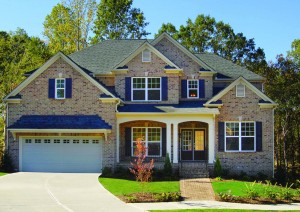 You’ve watched as your little ones grew from stumbling toddlers into young adulthood… and now out into the world on their own. It’s been a slow transition—but it’s also sped past in the blink of an eye! The bumpy economy may yet prompt some extended Myrtle Beach home stays in the future, but for now, the empty nest is suddenly reality.
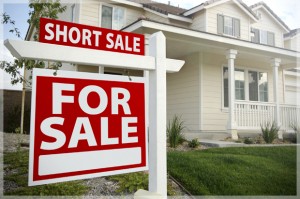 According to the National Association of Realtors®, across the nation, short sales and foreclosures accounted for about 10% of sales in September—down from 15% a year earlier. Seventy percent of those were foreclosures, leaving the remaining 30% as short sales. For bargain-hunters who wish to take advantage of one of the remaining Myrtle Beach short sale opportunities, declining numbers can be a double-edged sword. Fewer opportunities mean a sharp eye and more nimble footwork is likely to be required—but the shrinking market has also coincided with less competition from institutional buyers (whether as cause or effect is anyone’s guess).
 In TV commercials, the idea is to get the point across as economically as possible. That’s why, when the theme is a thriving business, they show a graph with lines that move up (often at an angle that would worry a mountain goat). It makes for an easily grasped, direct message.
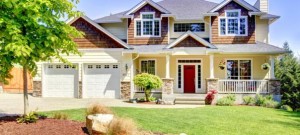 Home buyers’ first impressions are visual, and a flawed exterior will turn them away faster than a two-hour wait time at a family restaurant. Myrtle Beach curb appeal is the same as it is anywhere: when ‘curb appeal’ becomes ‘curb repel,’ the outcome to expect is at best offer numbers lower than they should be. Since major exterior remodels can carry prohibitive price tags, keeping the asking price competitive involves finding ways to brighten up the outside of a home without breaking the bank. It’s doable (and affordably) when you tackle the issue keeping the bottom line in mind. Some ideas:
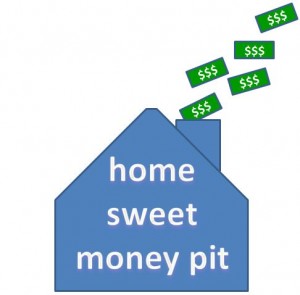 For many decades, Hollywood has made box office gold creating comic films about the hilarious possibilities that nightmarish house remodels present: from Mr. Blandings Builds his Dream House to The Money Pit (and even Under the Tuscan Sun), audiences delight in the shifty tradesmen and rotting timbers that define the genre.
 The previous decade’s burst of the real estate bubble, with its plummeting Myrtle Beach house prices and accompanying economic dislocations, made a lasting impression. For most homeowners the damage was strictly psychological: the majority weren’t even tempted to sell while Myrtle Beach house prices were dropping (or hovering below what they darned well knew were way beneath reasonable values).